
Nobody Said No. The Data Just…Isn’t Getting Used

Nobody’s resisting. Nobody’s arguing. And somehow, data still isn’t getting entered on time. Reports you sent last week are sitting unread in inboxes. Dashboard review meetings keep getting rescheduled.

There’s always a reason. “We had an emergency.” “I’ll get to it next week.”

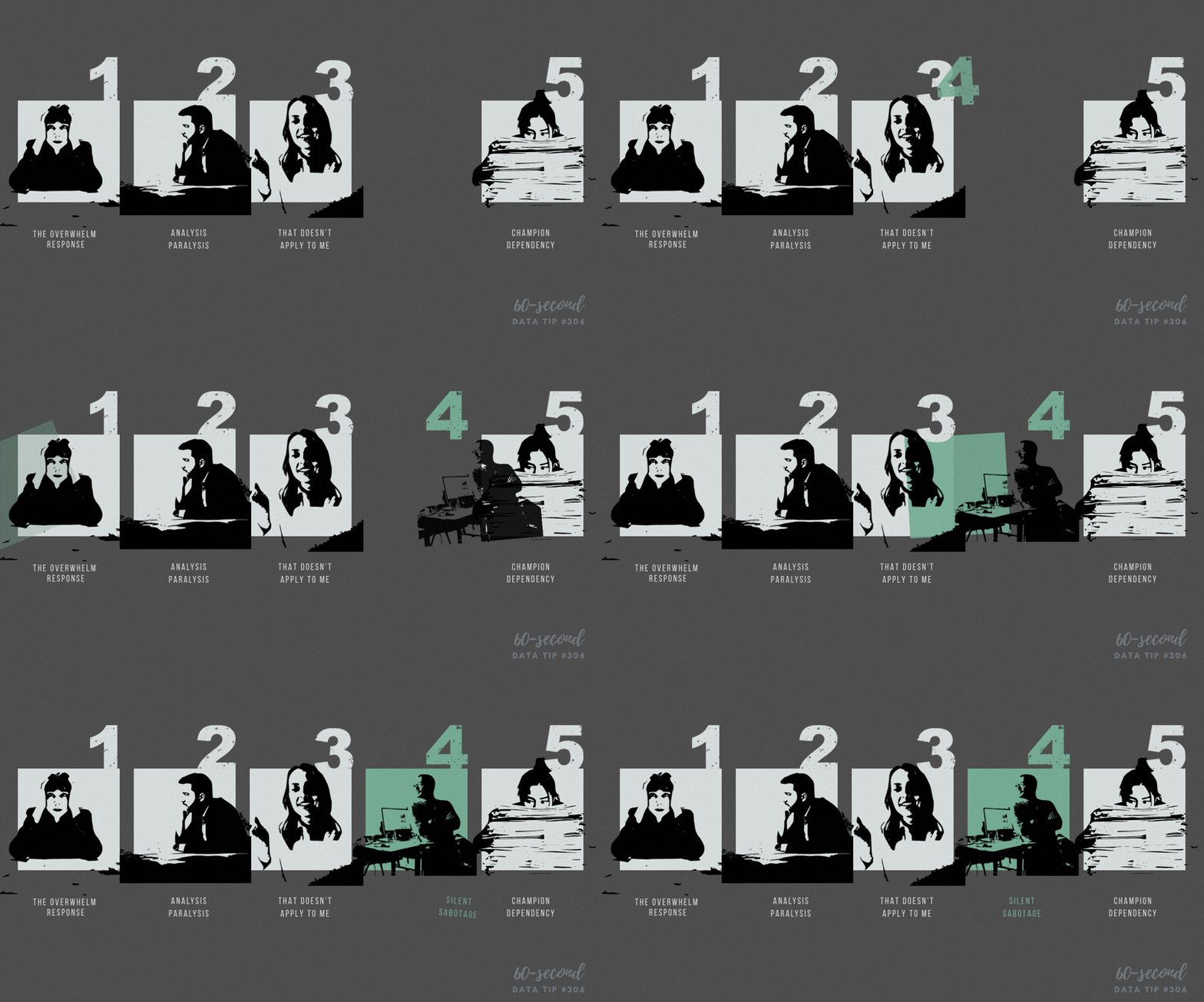
This is Silent Sabotage. It’s insidious because it looks like busyness. What’s really happening is self-protection. When you put data out there, you’re accountable for it. When numbers are bad, you have to deal with them. So not engaging becomes a form of defense.

The leadership move here is visible accountability. Not punishment, accountability.

“We review these five metrics in every leadership meeting. Non-negotiable.” “Data entry deadlines are firm.” “Dashboard review is on the calendar, and we don’t reschedule unless it’s an emergency.”

When data becomes non-optional, people stop treating it as optional. But you have to actually mean it. 

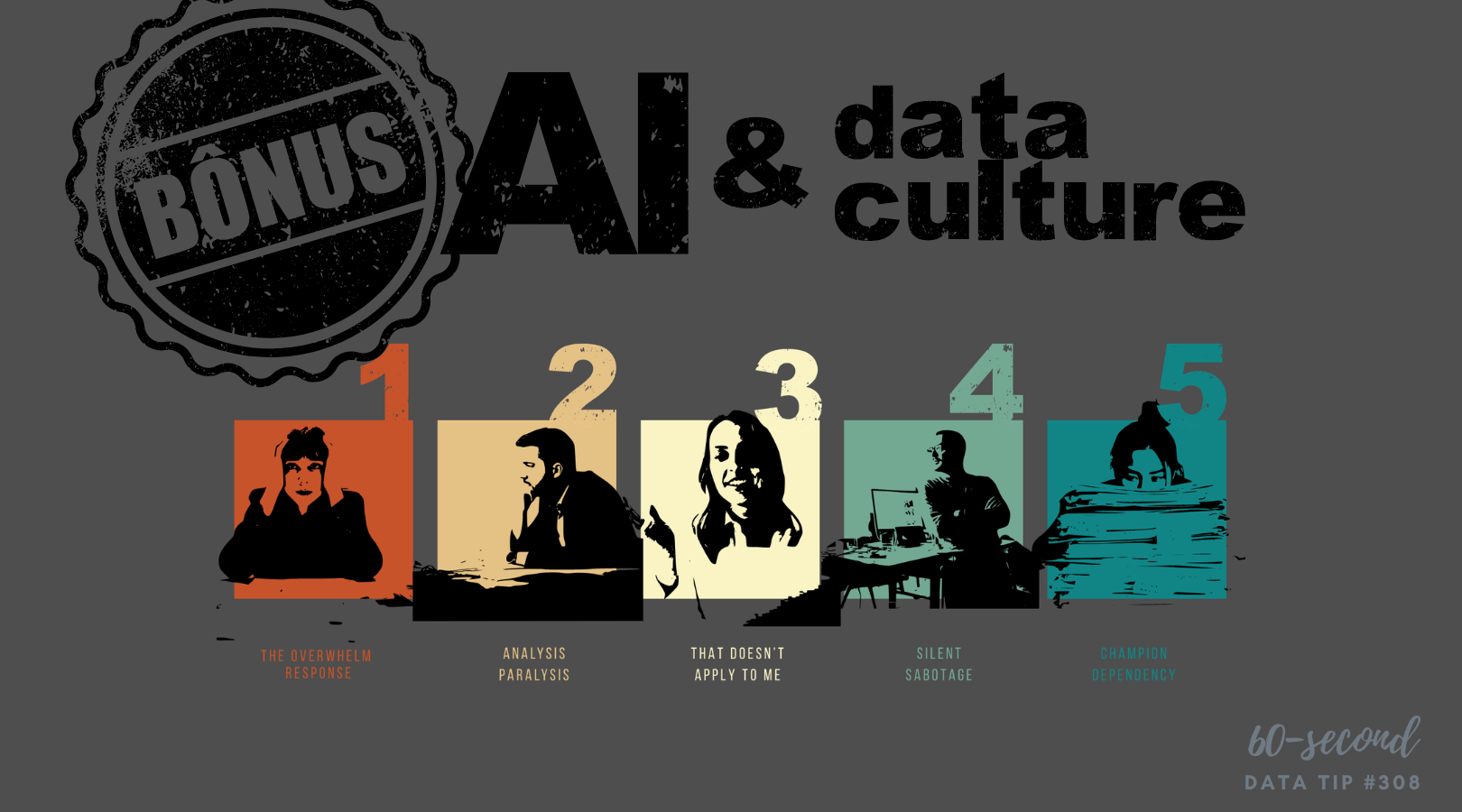
This is Part 5 of 6 in our miniseries on 5 Resistance Patterns that Kill Data Culture by Candra Reeves (See this introduction to the series.) Follow along each week for the remaining patterns:

Pattern 1: The Overwhelm Response

Pattern 2: Analysis Paralysis

Pattern 3: The ‘Doesn’t Apply to Me’ Response

Pattern 4: Silent Sabotage

Pattern 5: Champion Dependency.


Let’s talk about YOUR data!

Got the feeling that you and your colleagues would use your data more effectively if you could see it better? Data Viz for Nonprofits (DVN) can help you get the ball rolling with an interactive data dashboard and beautiful charts, maps, and graphs for your next presentation, report, proposal, or webpage. Through a short-term consultation, we can help you to clarify the questions you want to answer and goals you want to track. DVN then visualizes your data to address those questions and track those goals.


That’s Great, But it Doesn’t Really Apply to What We Do

Your development team thinks data is for the program team. Your program team thinks data is for the evaluators. Your evaluators think data is for the funders. And your funders think you’re on top of it.

Nobody’s lying. They’ve just quietly convinced themselves that data isn’t relevant to their specific work.

This is one of the subtler resistance patterns, and one of the most frustrating, because it’s passive. There’s no pushback, no debate. Just polite disengagement.

The leadership move is to make data answer their questions. Not funder questions. Their questions. 

“Which outreach strategy brings in donors who give again?” That’s a development question answered by data. “Which program model has better outcomes for our highest-risk clients?” That’s a program question answered by data. 

When data starts solving the problems your team already has, suddenly it applies to everyone. And, by the way, the data dashboard design process should begin with these types of questions.

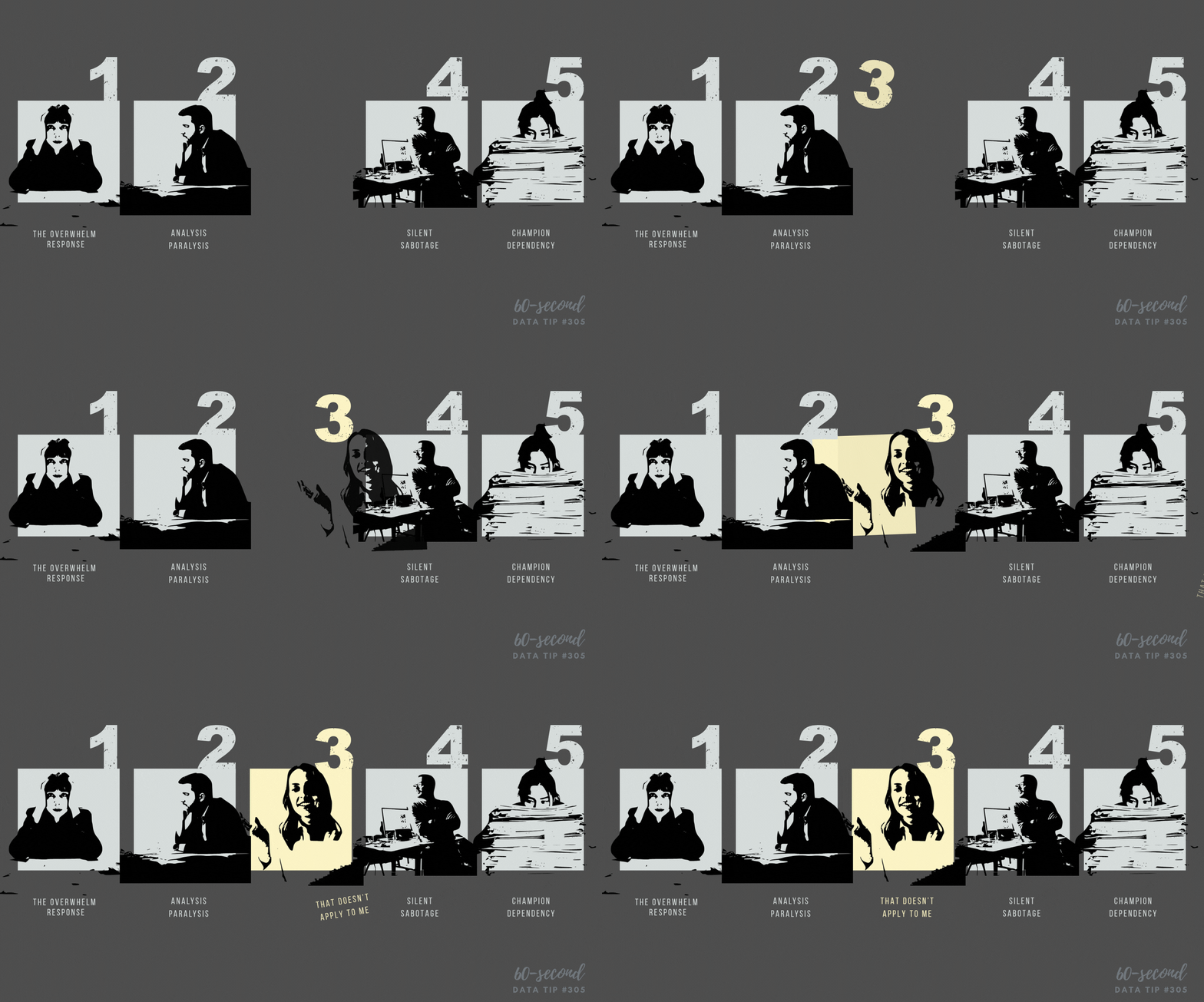
This is Part 4 of 6 in our miniseries on 5 Resistance Patterns that Kill Data Culture by Candra Reeves (See this introduction to the series.) . Follow along each week for the remaining patterns:

Pattern 1: The Overwhelm Response

Pattern 2: Analysis Paralysis

Pattern 3: The ‘Doesn’t Apply to Me’ Response

Pattern 4: Silent Sabotage

Pattern 5: Champion Dependency.


Let’s talk about YOUR data!

Got the feeling that you and your colleagues would use your data more effectively if you could see it better? Data Viz for Nonprofits (DVN) can help you get the ball rolling with an interactive data dashboard and beautiful charts, maps, and graphs for your next presentation, report, proposal, or webpage. Through a short-term consultation, we can help you to clarify the questions you want to answer and goals you want to track. DVN then visualizes your data to address those questions and track those goals.


Your Team Isn’t Resisting Data. They’re Afraid of Getting it Wrong

When someone on your team says, “There’s too much data. I don’t know where to start,” they’re not being difficult. They’re telling you something important.

Your program director has run successful programs for ten years on instinct and relationships. Now you’re handing her a dashboard. She’s terrified she’ll ask the wrong question, or worse, misinterpret it in front of her team. So, she avoids it entirely. This is the Overwhelm Response. And it’s a common resistance pattern I see in data culture work.

The leadership move isn’t more training. It’s fewer choices. Start with one decision. One metric. One meeting. Don’t ask her to master a dashboard, ask her: “Are more people completing your program this year than last?” That’s it. One number.

Build confidence before you build complexity. Data culture doesn't start with the right system. It starts with the right question.

This is the first pattern in our miniseries on 5 Resistance Patterns that Kill Data Culture by Candra Reeves (See this introduction to the series.) Follow along each week for the remaining patterns:

Pattern 1: The Overwhelm Response

Pattern 2: Analysis Paralysis

Pattern 3: The ‘Doesn’t Apply to Me’ Response

Pattern 4: Silent Sabotage

Pattern 5: Champion Dependency. 


Let’s talk about YOUR data!

Got the feeling that you and your colleagues would use your data more effectively if you could see it better? Data Viz for Nonprofits (DVN) can help you get the ball rolling with an interactive data dashboard and beautiful charts, maps, and graphs for your next presentation, report, proposal, or webpage. Through a short-term consultation, we can help you to clarify the questions you want to answer and goals you want to track. DVN then visualizes your data to address those questions and track those goals.


5 Resistance Patterns That Are Killing Your Data Culture

A few weeks back, I attended a webinar with Candra Reeves. I loved how she so aptly described all the common and quite understandable reasons folks don't embrace data. And I loved her simple and clear ways of addressing those barriers. So I asked her to share her ideas in a series of 60-Second Data Tips. I'm pleased to share the first one today. -Amelia


I’m Candra Reeves, Founder & Principal of the Ardelle Group. Before launching my consultancy, I spent over a decade in the nonprofit sector. In that time, I watched well-funded data initiatives collapse. Not because the tools were bad, but because nobody addressed the human side. The resistance. The fear. The habits that outlast any dashboard or data initiative.

After more than 12 years of this work, I’ve identified five resistance patterns that show up in nearly every organization I work with. You’re probably experiencing at least two or three right now.

Over the next five posts, I’m going deep on each one - what it looks like, what’s really happening underneath, and the leadership move that breaks the pattern.

Follow along each week (for the next 5 weeks) so you don’t miss a single one. And if you want to know which patterns are showing up in your organization right now, start with our free self-assessment

Pattern 1: The Overwhelm Response

Pattern 2: Analysis Paralysis

Pattern 3: The ‘Doesn’t Apply to Me’ Response

Pattern 4: Silent Sabotage

Pattern 5: Champion Dependency. 


Let’s talk about YOUR data!

Got the feeling that you and your colleagues would use your data more effectively if you could see it better? Data Viz for Nonprofits (DVN) can help you get the ball rolling with an interactive data dashboard and beautiful charts, maps, and graphs for your next presentation, report, proposal, or webpage. Through a short-term consultation, we can help you to clarify the questions you want to answer and goals you want to track. DVN then visualizes your data to address those questions and track those goals.


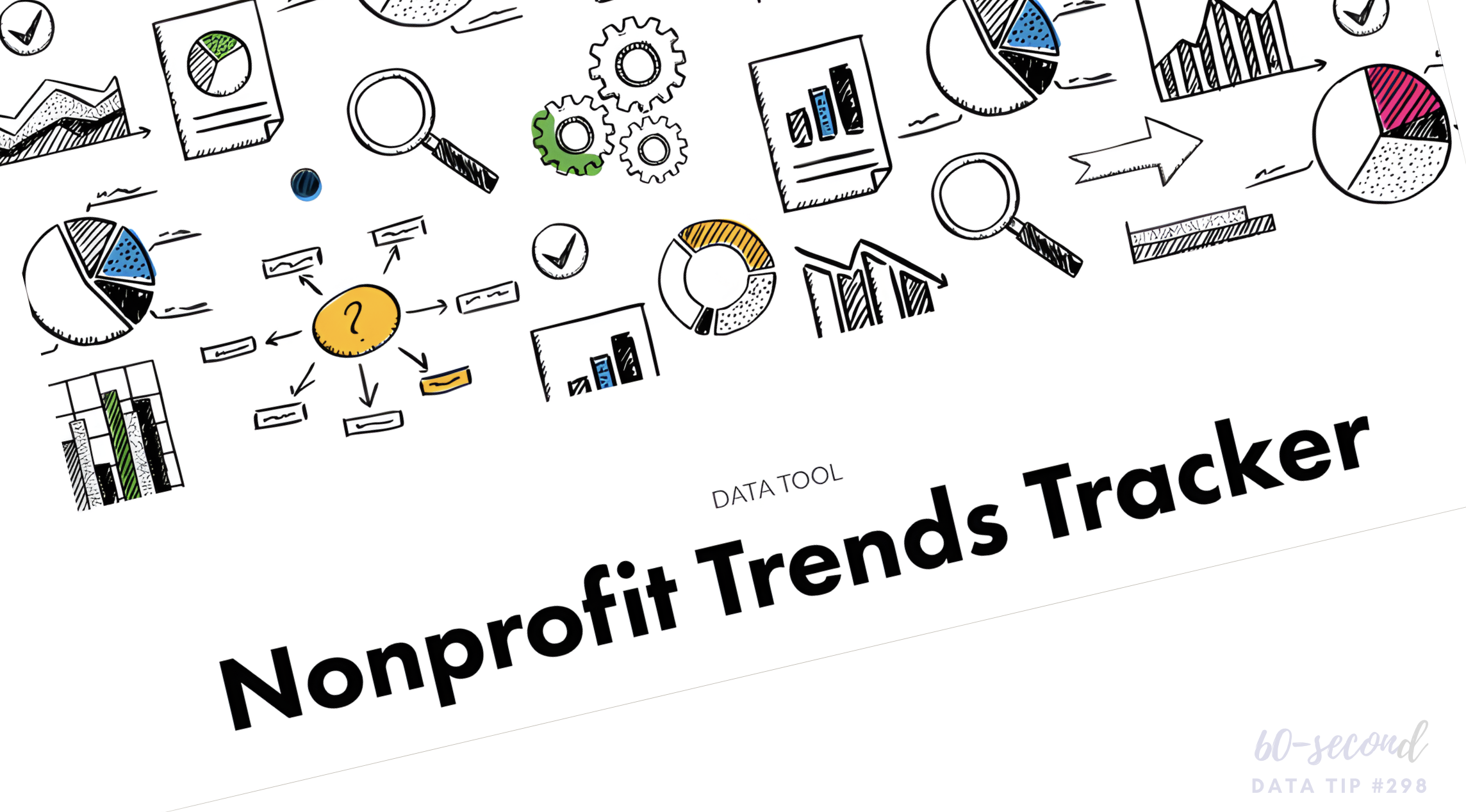
Data Viz Resources You Should Know: Nonprofit Trends Tracker

If you ever need quick context about what’s happening across the nonprofit sector, the Nonprofit Trends Tracker is a tool worth bookmarking.

What is it?
An interactive online tool that brings together national data about the nonprofit sector. You can explore trends in areas like charitable giving, nonprofit employment, volunteering, and the number of nonprofit organizations over time. The charts are simple, clear, and easy to navigate.

Who’s it for?
Anyone who needs context for their organization’s data—especially nonprofit staff preparing reports, grant proposals, presentations, or strategic plans. It’s a quick way to answer questions like: Are donations changing nationally? Is nonprofit employment growing or shrinking?

Who’s behind it?
The Urban Institute, a respected nonprofit research organization that analyzes social and economic policy.

Why I think it’s cool
Your organization’s data tells your story, but sometimes you also need to show the bigger picture. This tool makes it easy to add credible sector-wide context to your charts and reports, often with just a quick screenshot or citation.


Let’s talk about YOUR data!

Got the feeling that you and your colleagues would use your data more effectively if you could see it better? Data Viz for Nonprofits (DVN) can help you get the ball rolling with an interactive data dashboard and beautiful charts, maps, and graphs for your next presentation, report, proposal, or webpage. Through a short-term consultation, we can help you to clarify the questions you want to answer and goals you want to track. DVN then visualizes your data to address those questions and track those goals.