
Are Your Charts Social-Media Ready?

A chart that works beautifully in a report or website falls completely flat on social media. Different context, different rules.

Flourish recently ran a webinar on exactly this, and the core insight was simple: on social media, you have about two seconds to earn someone's attention. That changes everything about how you design.

Here are the principles that stuck with me.

Lead with the hook, not the data. Your chart title isn't a label. It's a headline. Find the surprising moment, the unexpected outlier, the pattern nobody saw coming and put that in the title.

Strip it down. The instinct when making charts is to add: more labels, more context, more color. For social, go the other direction. Ask yourself what you can remove and still have the story come through. Less color, less text, less clutter.

Pass the 5-second test. Can someone read it, grasp the key message, and understand who made it in five seconds? Check for readable text size, strong contrast, clear labels, and your logo, because if it gets reshared, you want credit.

Think format, not just chart. Carousels are getting 11x more interactions on LinkedIn right now. A single chart is a standalone moment. A series of charts is a mini-article with a beginning, middle, and end. Decide which one you're making before you start building.

Nonprofit communicators often have genuinely important data to share such as program outcomes, community trends, impact numbers. The story is already there. The question is whether your chart gives it two seconds to shine.

Tips drawn from Flourish's webinar "Stop the Scroll: Designing Charts for Social Media." Watch the recording here.


Let’s talk about YOUR data!

Got the feeling that you and your colleagues would use your data more effectively if you could see it better? Data Viz for Nonprofits (DVN) can help you get the ball rolling with an interactive data dashboard and beautiful charts, maps, and graphs for your next presentation, report, proposal, or webpage. Through a short-term consultation, we can help you to clarify the questions you want to answer and goals you want to track. DVN then visualizes your data to address those questions and track those goals.



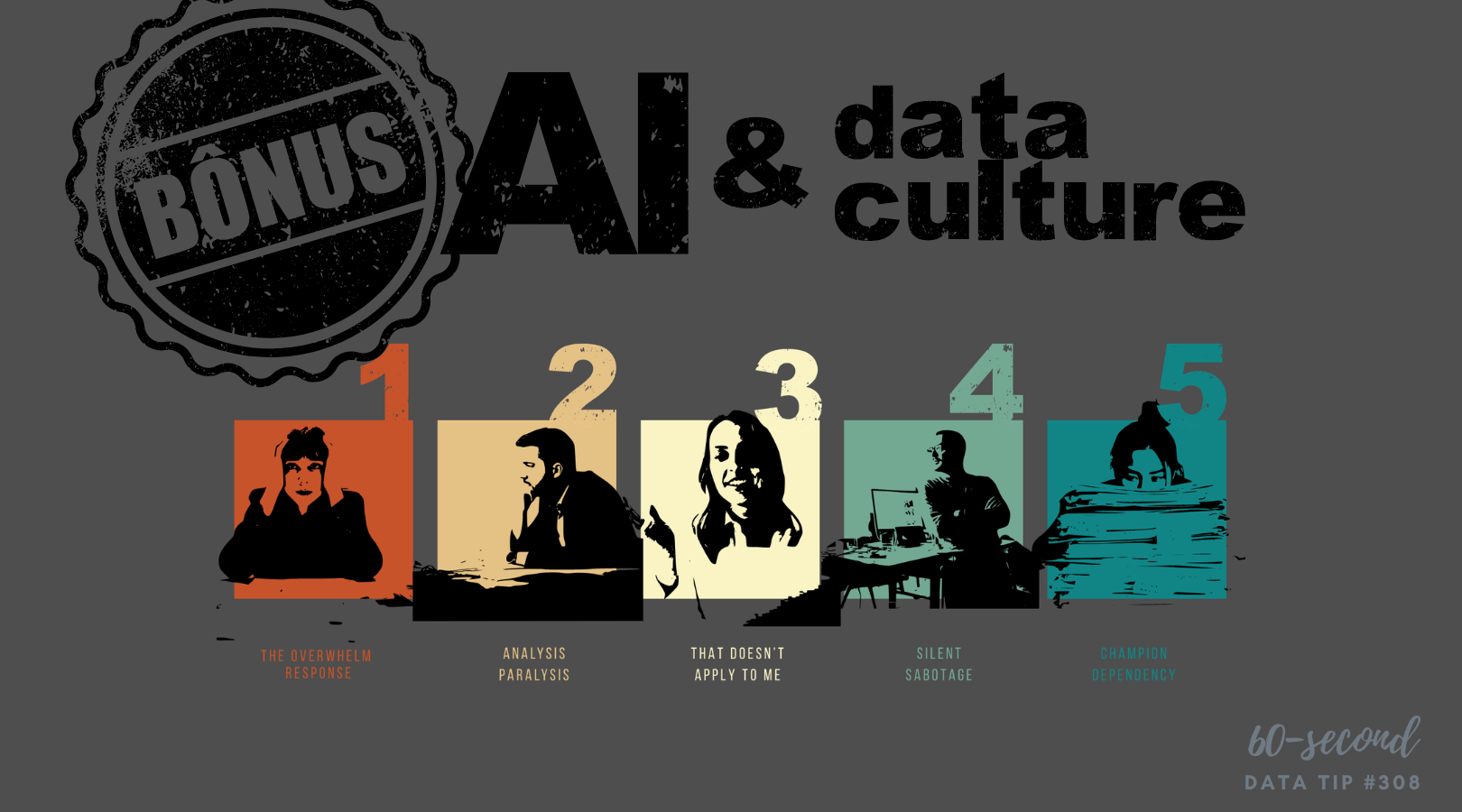
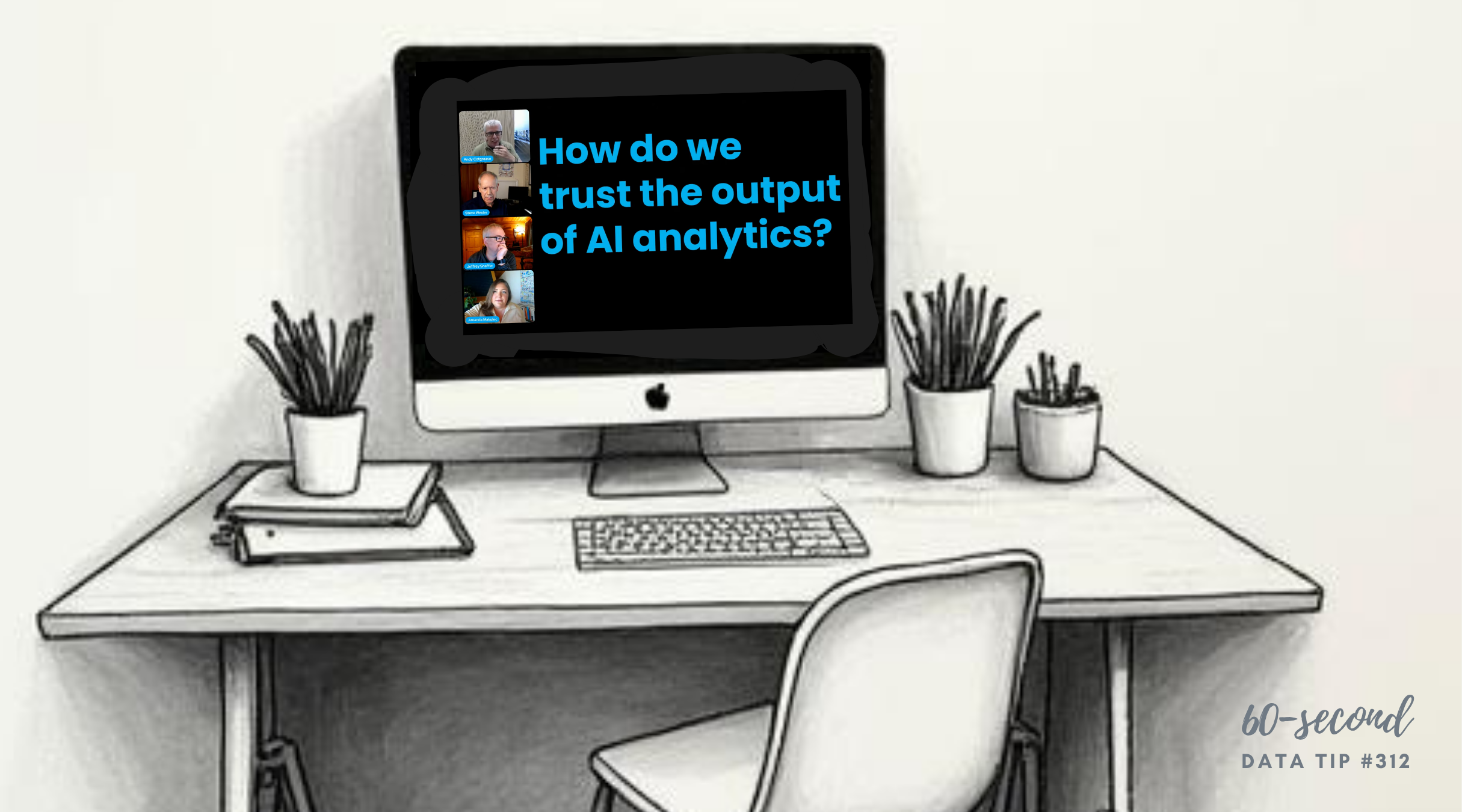
Bonus: AI Won't Fix Your Data Culture. But Here's Where It Can Help

Nonprofit professionals are asking the same question right now: Should we be using AI to understand our data?

The honest answer is: it depends on where you are in your data culture journey.

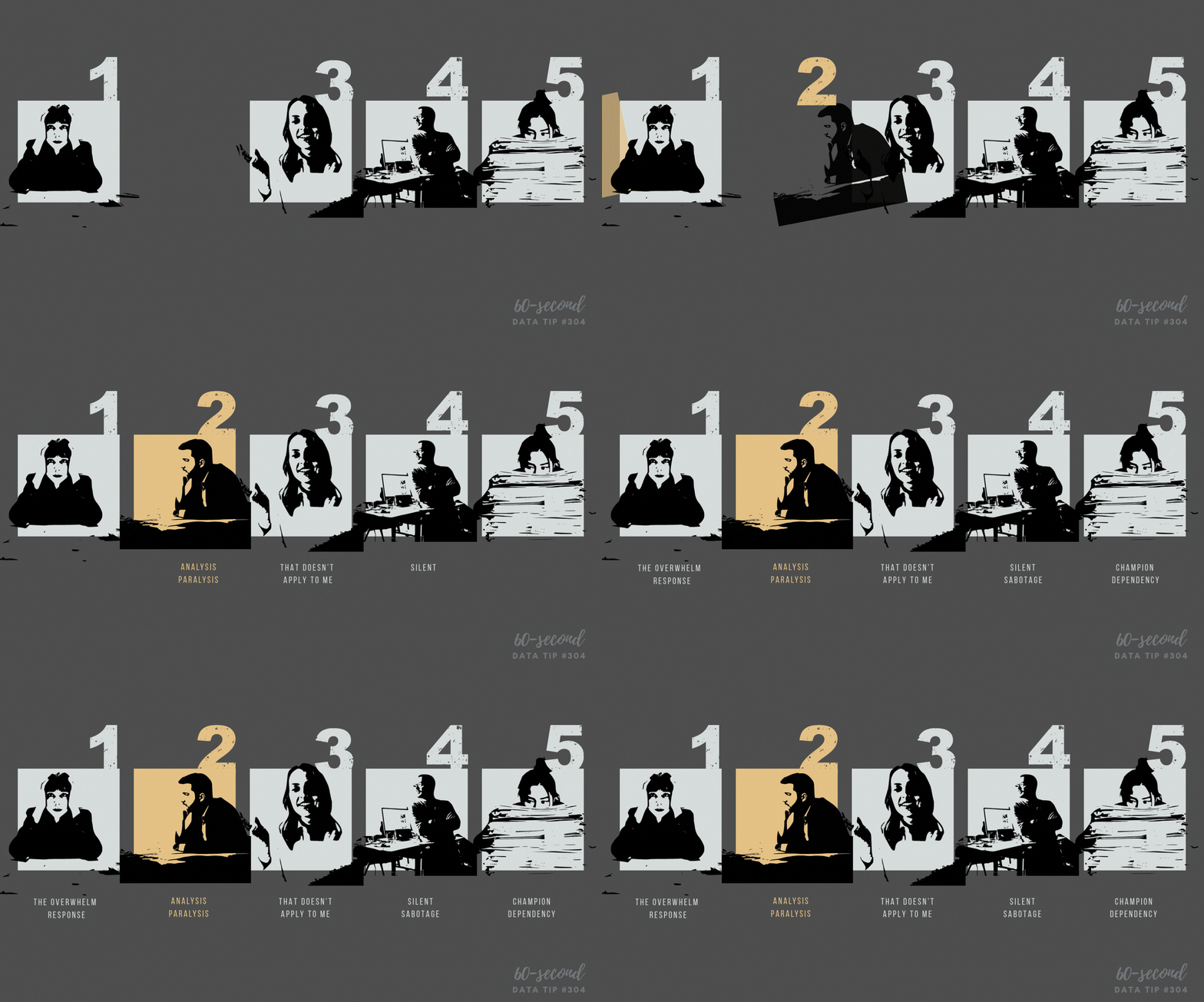
If your team is still struggling with The Overwhelm Response, afraid to engage with data at all, AI adds another layer of complexity before the foundation is there. You can't shortcut culture with a tool. Not even a smart one.

But once your team has some footing, AI can genuinely help in three places:

  1. It can lower the barrier to entry. AI can translate a dense dataset into plain language, making it easier for your program director to ask questions without fear of getting it wrong.

  2. It can speed up analysis. If your team is stuck in Analysis Paralysis waiting for more data, AI can help synthesize what you already have faster, removing the excuse to delay.

  3. It can help distribute data knowledge. One of the risks of Champion Dependency is that data expertise lives in one person. AI tools can give more people access to basic analysis, reducing that single point of failure.

One important note: AI can generate inaccurate analysis and reflect biases in your data without flagging either. Always have a human review AI-generated output before it informs a decision. 

What AI can't do is make your leadership model data-driven behavior, hold your team accountable, or build the trust that makes data culture stick. Those are human moves.

Use AI to remove friction. Don't use it to replace the culture work.

This is a bonus post in our miniseries on 5 Resistance Patterns that Kill Data Culture:

Pattern 1: The Overwhelm Response

Pattern 2: Analysis Paralysis

Pattern 3: The ‘Doesn’t Apply to Me’ Response

Pattern 4: Silent Sabotage

Pattern 5: Champion Dependency.

This is the last guest post from Candra Reeves of the Ardelle Group which helps organizations to build data cultures that survive staff changes and organizational transitions. Ready to start? Schedule a consultation at Ardelle.group


Let’s talk about YOUR data!

Got the feeling that you and your colleagues would use your data more effectively if you could see it better? Data Viz for Nonprofits (DVN) can help you get the ball rolling with an interactive data dashboard and beautiful charts, maps, and graphs for your next presentation, report, proposal, or webpage. Through a short-term consultation, we can help you to clarify the questions you want to answer and goals you want to track. DVN then visualizes your data to address those questions and track those goals.


Oh That’s Sarah’s Thing

You have a data champion. Maybe it’s your data analyst, your Deputy Director who loves spreadsheets, or the program manager who always comes to meetings with numbers. Everyone goes to her. She pulls reports, builds dashboards, and answers every data question.

Your data culture feels alive. And it is, inside one person.

I have personally watched organizations lose three years of data culture progress when their “Sarah” left. Within six months, nobody was looking at dashboards anymore. Not because the dashboard changed, but because the culture lives in one person, not the organization.

Champion Dependency is the most dangerous pattern because it looks like success until it isn’t.

The leadership move is to distribute ownership. Make data everyone’s responsibility, not just who asks for it, but who interprets it and uses it. Build data into your meetings, your decision-making, and your onboarding. 

Sarah will leave eventually. They always do. Make sure your data culture stays when she walks out the door.

This is Part 6 of 6 in our miniseries on 5 Resistance Patterns that Kill Data Culture by Candra Reeves (See this introduction to the series.)

Pattern 1: The Overwhelm Response

Pattern 2: Analysis Paralysis

Pattern 3: The ‘Doesn’t Apply to Me’ Response

Pattern 4: Silent Sabotage

Pattern 5: Champion Dependency.

That’s all 5 patterns. But there’s a bonus tip on AI and data culture next week.This is the work the Ardelle Group does every day, building data cultures that survive staff changes and organizational transitions. Ready to start? Schedule a consultation at Ardelle.group


Let’s talk about YOUR data!

Got the feeling that you and your colleagues would use your data more effectively if you could see it better? Data Viz for Nonprofits (DVN) can help you get the ball rolling with an interactive data dashboard and beautiful charts, maps, and graphs for your next presentation, report, proposal, or webpage. Through a short-term consultation, we can help you to clarify the questions you want to answer and goals you want to track. DVN then visualizes your data to address those questions and track those goals.


Nobody Said No. The Data Just…Isn’t Getting Used

Nobody’s resisting. Nobody’s arguing. And somehow, data still isn’t getting entered on time. Reports you sent last week are sitting unread in inboxes. Dashboard review meetings keep getting rescheduled.

There’s always a reason. “We had an emergency.” “I’ll get to it next week.”

This is Silent Sabotage. It’s insidious because it looks like busyness. What’s really happening is self-protection. When you put data out there, you’re accountable for it. When numbers are bad, you have to deal with them. So not engaging becomes a form of defense.

The leadership move here is visible accountability. Not punishment, accountability.

“We review these five metrics in every leadership meeting. Non-negotiable.” “Data entry deadlines are firm.” “Dashboard review is on the calendar, and we don’t reschedule unless it’s an emergency.”

When data becomes non-optional, people stop treating it as optional. But you have to actually mean it. 

This is Part 5 of 6 in our miniseries on 5 Resistance Patterns that Kill Data Culture by Candra Reeves (See this introduction to the series.) Follow along each week for the remaining patterns:

Pattern 1: The Overwhelm Response

Pattern 2: Analysis Paralysis

Pattern 3: The ‘Doesn’t Apply to Me’ Response

Pattern 4: Silent Sabotage

Pattern 5: Champion Dependency.


Let’s talk about YOUR data!

Got the feeling that you and your colleagues would use your data more effectively if you could see it better? Data Viz for Nonprofits (DVN) can help you get the ball rolling with an interactive data dashboard and beautiful charts, maps, and graphs for your next presentation, report, proposal, or webpage. Through a short-term consultation, we can help you to clarify the questions you want to answer and goals you want to track. DVN then visualizes your data to address those questions and track those goals.


That’s Great, But it Doesn’t Really Apply to What We Do

Your development team thinks data is for the program team. Your program team thinks data is for the evaluators. Your evaluators think data is for the funders. And your funders think you’re on top of it.

Nobody’s lying. They’ve just quietly convinced themselves that data isn’t relevant to their specific work.

This is one of the subtler resistance patterns, and one of the most frustrating, because it’s passive. There’s no pushback, no debate. Just polite disengagement.

The leadership move is to make data answer their questions. Not funder questions. Their questions. 

“Which outreach strategy brings in donors who give again?” That’s a development question answered by data. “Which program model has better outcomes for our highest-risk clients?” That’s a program question answered by data. 

When data starts solving the problems your team already has, suddenly it applies to everyone. And, by the way, the data dashboard design process should begin with these types of questions.

This is Part 4 of 6 in our miniseries on 5 Resistance Patterns that Kill Data Culture by Candra Reeves (See this introduction to the series.) . Follow along each week for the remaining patterns:

Pattern 1: The Overwhelm Response

Pattern 2: Analysis Paralysis

Pattern 3: The ‘Doesn’t Apply to Me’ Response

Pattern 4: Silent Sabotage

Pattern 5: Champion Dependency.


Let’s talk about YOUR data!

Got the feeling that you and your colleagues would use your data more effectively if you could see it better? Data Viz for Nonprofits (DVN) can help you get the ball rolling with an interactive data dashboard and beautiful charts, maps, and graphs for your next presentation, report, proposal, or webpage. Through a short-term consultation, we can help you to clarify the questions you want to answer and goals you want to track. DVN then visualizes your data to address those questions and track those goals.


We Just Need a Little More Data

You’ve been in this meeting. Your team has good data. Everyone agrees it’s pointing in a clear direction. And then someone says it: “I think we need just a little more research before we decide.”

This is Analysis Paralysis. And it’s not about the data. It’s about accountability.

Here’s the uncomfortable truth: once you make a data-informed decision, you’re on the record. If it fails, you can’t say “we didn’t have enough information.” So, requesting more data becomes a very sophisticated way of avoiding that exposure. 

The leadership move? Set decision deadlines and give your team explicit permission to be imperfect. 

“We’re deciding on Tuesday with whatever data we have by Monday.” Say it out loud. Put it in the calendar.

Most decisions don’t require 100% certainty. They require 80% certainty and courage. Your job as a leader is to model that and make it clear that waiting is also a decision, and not always the safer one.

This is Part 3 of 6 in our miniseries on 5 Resistance Patterns that Kill Data Culture by Candra Reeves (See this introduction to the series.) Follow along each week for the remaining patterns:

Pattern 1: The Overwhelm Response

Pattern 2: Analysis Paralysis

Pattern 3: The ‘Doesn’t Apply to Me’ Response

Pattern 4: Silent Sabotage

Pattern 5: Champion Dependency.


Let’s talk about YOUR data!

Got the feeling that you and your colleagues would use your data more effectively if you could see it better? Data Viz for Nonprofits (DVN) can help you get the ball rolling with an interactive data dashboard and beautiful charts, maps, and graphs for your next presentation, report, proposal, or webpage. Through a short-term consultation, we can help you to clarify the questions you want to answer and goals you want to track. DVN then visualizes your data to address those questions and track those goals.

Your Team Isn’t Resisting Data. They’re Afraid of Getting it Wrong

When someone on your team says, “There’s too much data. I don’t know where to start,” they’re not being difficult. They’re telling you something important.

Your program director has run successful programs for ten years on instinct and relationships. Now you’re handing her a dashboard. She’s terrified she’ll ask the wrong question, or worse, misinterpret it in front of her team. So, she avoids it entirely. This is the Overwhelm Response. And it’s a common resistance pattern I see in data culture work.

The leadership move isn’t more training. It’s fewer choices. Start with one decision. One metric. One meeting. Don’t ask her to master a dashboard, ask her: “Are more people completing your program this year than last?” That’s it. One number.

Build confidence before you build complexity. Data culture doesn't start with the right system. It starts with the right question.

This is the first pattern in our miniseries on 5 Resistance Patterns that Kill Data Culture by Candra Reeves (See this introduction to the series.) Follow along each week for the remaining patterns:

Pattern 1: The Overwhelm Response

Pattern 2: Analysis Paralysis

Pattern 3: The ‘Doesn’t Apply to Me’ Response

Pattern 4: Silent Sabotage

Pattern 5: Champion Dependency.


Let’s talk about YOUR data!

Got the feeling that you and your colleagues would use your data more effectively if you could see it better? Data Viz for Nonprofits (DVN) can help you get the ball rolling with an interactive data dashboard and beautiful charts, maps, and graphs for your next presentation, report, proposal, or webpage. Through a short-term consultation, we can help you to clarify the questions you want to answer and goals you want to track. DVN then visualizes your data to address those questions and track those goals.

5 Resistance Patterns That Are Killing Your Data Culture

A few weeks back, I attended a webinar with Candra Reeves. I loved how she so aptly described all the common and quite understandable reasons folks don't embrace data. And I loved her simple and clear ways of addressing those barriers. So I asked her to share her ideas in a series of 60-Second Data Tips. I'm pleased to share the first one today. -Amelia


I’m Candra Reeves, Founder & Principal of the Ardelle Group. Before launching my consultancy, I spent over a decade in the nonprofit sector. In that time, I watched well-funded data initiatives collapse. Not because the tools were bad, but because nobody addressed the human side. The resistance. The fear. The habits that outlast any dashboard or data initiative.

After more than 12 years of this work, I’ve identified five resistance patterns that show up in nearly every organization I work with. You’re probably experiencing at least two or three right now.

Over the next five posts, I’m going deep on each one - what it looks like, what’s really happening underneath, and the leadership move that breaks the pattern.

Follow along each week (for the next 5 weeks) so you don’t miss a single one. And if you want to know which patterns are showing up in your organization right now, start with our free self-assessment

Pattern 1: The Overwhelm Response

Pattern 2: Analysis Paralysis

Pattern 3: The ‘Doesn’t Apply to Me’ Response

Pattern 4: Silent Sabotage

Pattern 5: Champion Dependency.


Let’s talk about YOUR data!

Got the feeling that you and your colleagues would use your data more effectively if you could see it better? Data Viz for Nonprofits (DVN) can help you get the ball rolling with an interactive data dashboard and beautiful charts, maps, and graphs for your next presentation, report, proposal, or webpage. Through a short-term consultation, we can help you to clarify the questions you want to answer and goals you want to track. DVN then visualizes your data to address those questions and track those goals.


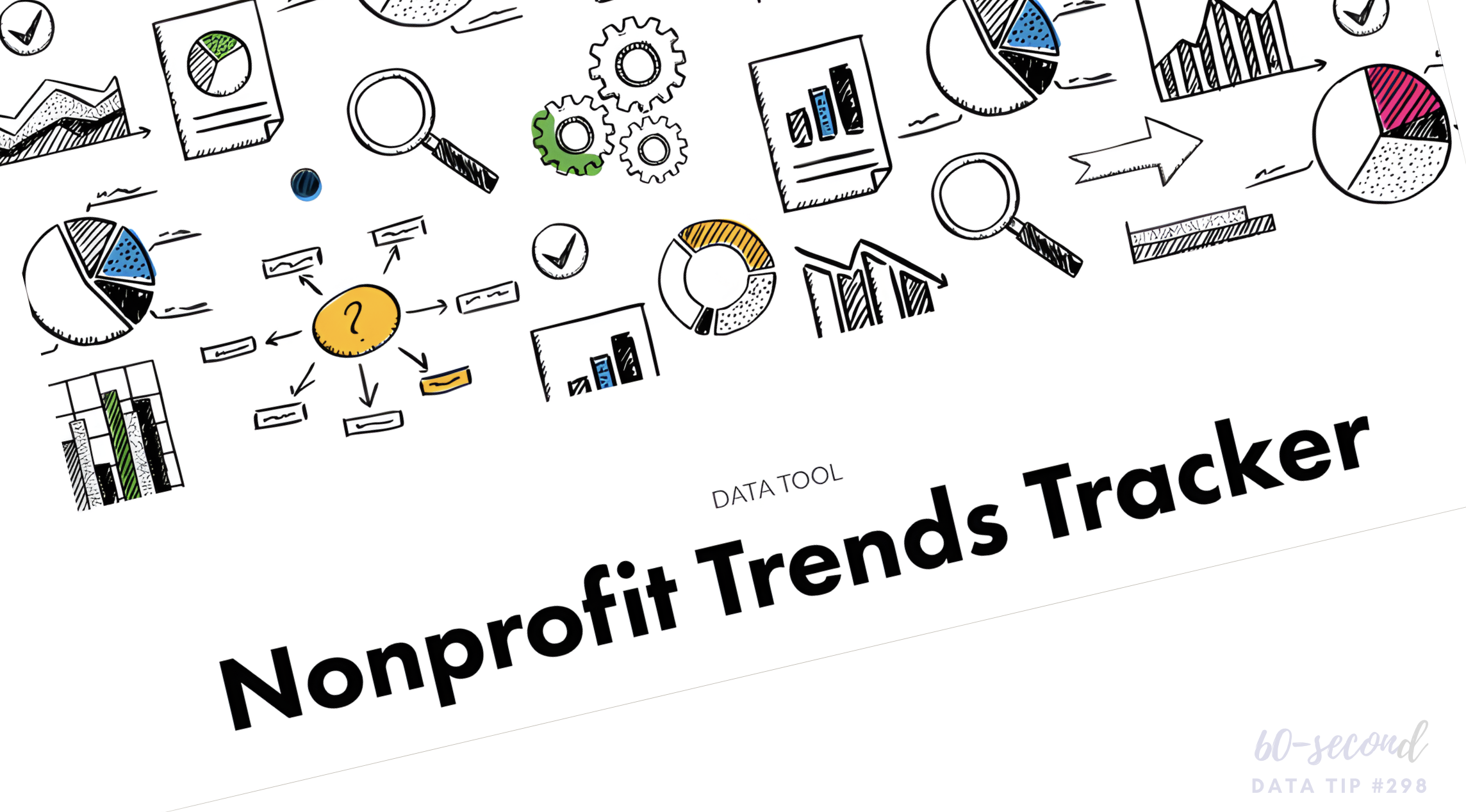
Data Viz Resources You Should Know: Nonprofit Trends Tracker

If you ever need quick context about what’s happening across the nonprofit sector, the Nonprofit Trends Tracker is a tool worth bookmarking.

What is it?
An interactive online tool that brings together national data about the nonprofit sector. You can explore trends in areas like charitable giving, nonprofit employment, volunteering, and the number of nonprofit organizations over time. The charts are simple, clear, and easy to navigate.

Who’s it for?
Anyone who needs context for their organization’s data—especially nonprofit staff preparing reports, grant proposals, presentations, or strategic plans. It’s a quick way to answer questions like: Are donations changing nationally? Is nonprofit employment growing or shrinking?

Who’s behind it?
The Urban Institute, a respected nonprofit research organization that analyzes social and economic policy.

Why I think it’s cool
Your organization’s data tells your story, but sometimes you also need to show the bigger picture. This tool makes it easy to add credible sector-wide context to your charts and reports, often with just a quick screenshot or citation.


Let’s talk about YOUR data!

Got the feeling that you and your colleagues would use your data more effectively if you could see it better? Data Viz for Nonprofits (DVN) can help you get the ball rolling with an interactive data dashboard and beautiful charts, maps, and graphs for your next presentation, report, proposal, or webpage. Through a short-term consultation, we can help you to clarify the questions you want to answer and goals you want to track. DVN then visualizes your data to address those questions and track those goals.