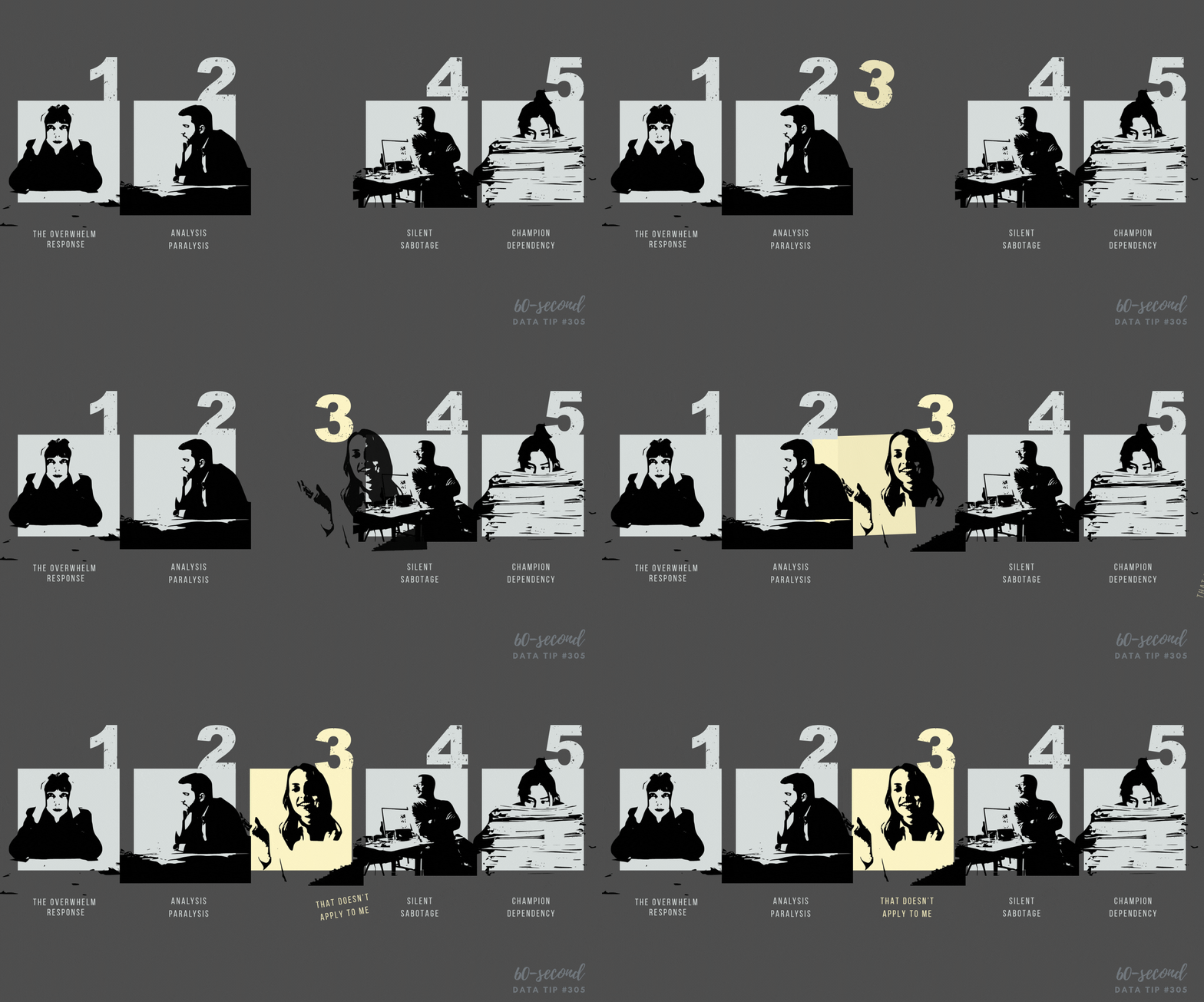
Your development team thinks data is for the program team. Your program team thinks data is for the evaluators. Your evaluators think data is for the funders. And your funders think you’re on top of it.
Nobody’s lying. They’ve just quietly convinced themselves that data isn’t relevant to their specific work.
This is one of the subtler resistance patterns, and one of the most frustrating, because it’s passive. There’s no pushback, no debate. Just polite disengagement.
The leadership move is to make data answer their questions. Not funder questions. Their questions.
“Which outreach strategy brings in donors who give again?” That’s a development question answered by data. “Which program model has better outcomes for our highest-risk clients?” That’s a program question answered by data.
When data starts solving the problems your team already has, suddenly it applies to everyone. And, by the way, the data dashboard design process should begin with these types of questions.
This is Part 4 of 6 in our miniseries on 5 Resistance Patterns that Kill Data Culture by Candra Reeves (See this introduction to the series.) . Follow along each week for the remaining patterns:
Pattern 1: The Overwhelm Response

Let’s talk about YOUR data!
Got the feeling that you and your colleagues would use your data more effectively if you could see it better? Data Viz for Nonprofits (DVN) can help you get the ball rolling with an interactive data dashboard and beautiful charts, maps, and graphs for your next presentation, report, proposal, or webpage. Through a short-term consultation, we can help you to clarify the questions you want to answer and goals you want to track. DVN then visualizes your data to address those questions and track those goals.