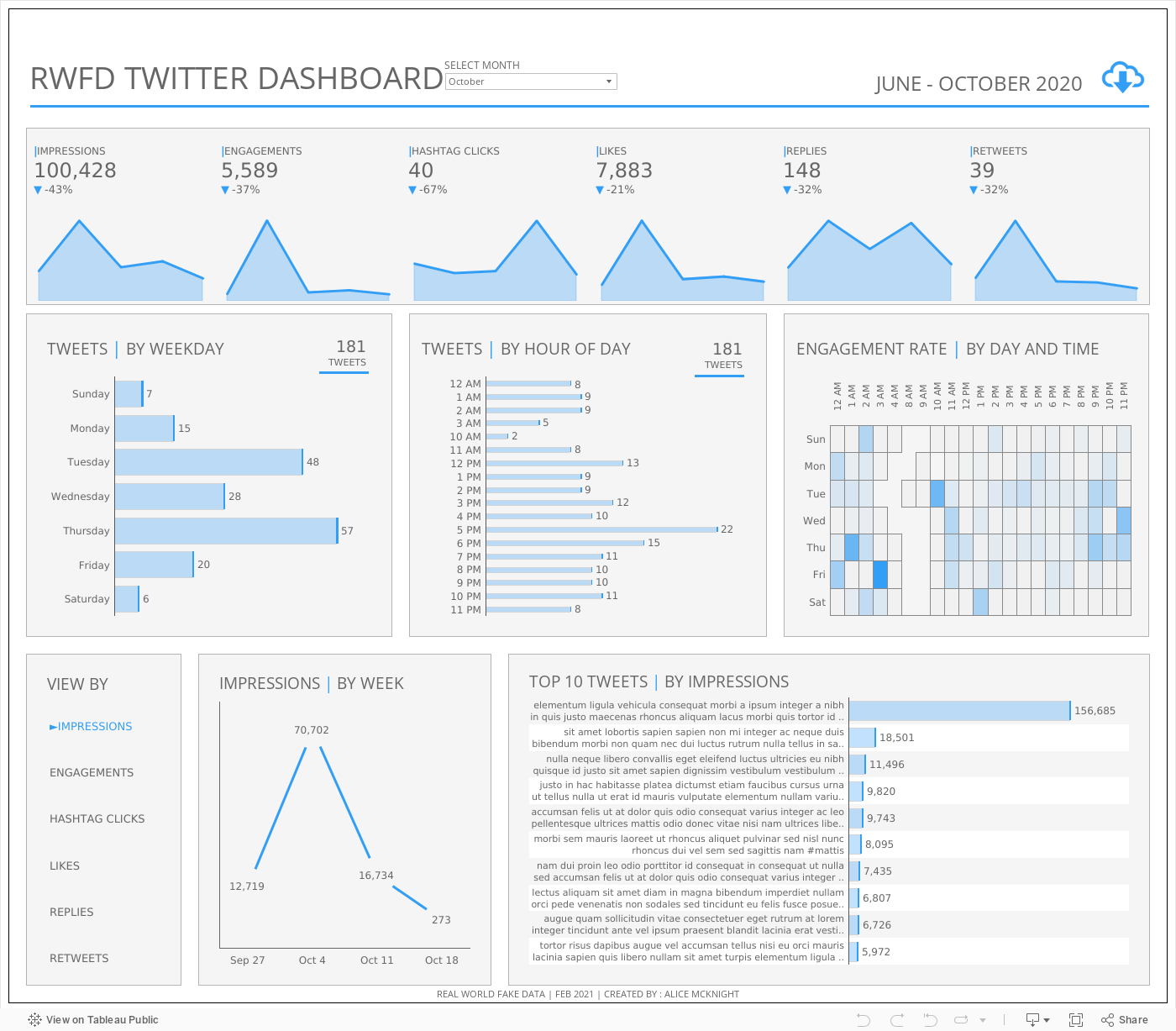

A chart that works beautifully in a report or website falls completely flat on social media. Different context, different rules.
Flourish recently ran a webinar on exactly this, and the core insight was simple: on social media, you have about two seconds to earn someone's attention. That changes everything about how you design.
Here are the principles that stuck with me.
Lead with the hook, not the data. Your chart title isn't a label. It's a headline. Find the surprising moment, the unexpected outlier, the pattern nobody saw coming and put that in the title.
Strip it down. The instinct when making charts is to add: more labels, more context, more color. For social, go the other direction. Ask yourself what you can remove and still have the story come through. Less color, less text, less clutter.
Pass the 5-second test. Can someone read it, grasp the key message, and understand who made it in five seconds? Check for readable text size, strong contrast, clear labels, and your logo, because if it gets reshared, you want credit.
Think format, not just chart. Carousels are getting 11x more interactions on LinkedIn right now. A single chart is a standalone moment. A series of charts is a mini-article with a beginning, middle, and end. Decide which one you're making before you start building.
Nonprofit communicators often have genuinely important data to share such as program outcomes, community trends, impact numbers. The story is already there. The question is whether your chart gives it two seconds to shine.
Tips drawn from Flourish's webinar "Stop the Scroll: Designing Charts for Social Media." Watch the recording here.
Let’s talk about YOUR data!
Got the feeling that you and your colleagues would use your data more effectively if you could see it better? Data Viz for Nonprofits (DVN) can help you get the ball rolling with an interactive data dashboard and beautiful charts, maps, and graphs for your next presentation, report, proposal, or webpage. Through a short-term consultation, we can help you to clarify the questions you want to answer and goals you want to track. DVN then visualizes your data to address those questions and track those goals.